
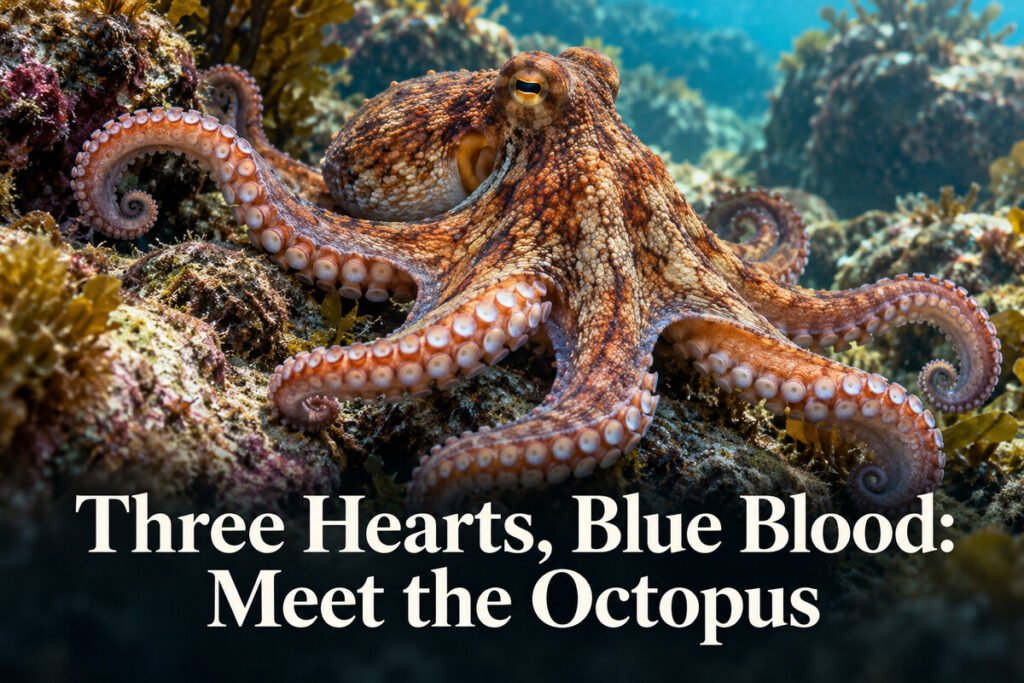
Find out why octopuses have three hearts, how their blood turns blue, and what makes their flexible bodies so remarkable.Eight arms are only the beginning. An octopus has three hearts and blue blood, making its body very different from ours.These facts sound like details from a science-fiction story. In reality, they offer a fascinating introduction to an animal adapted to life underwater.
Why Three Hearts?
Two hearts pump blood through the gills, where it picks up oxygen. A third circulates blood around the rest of the body.
The important point is that the hearts have different jobs. The arrangement helps connect oxygen uptake at the gills with the tissues that need it throughout the animal.
What Makes the Blood Blue?
Octopuses use an oxygen-carrying protein called haemocyanin, which contains copper. When oxygenated, it gives their blood a blue colour.
Human blood uses haemoglobin, which contains iron. The contrast is a reminder that animals do not all solve the problem of transporting oxygen in the same way.
Arms With Remarkable Control
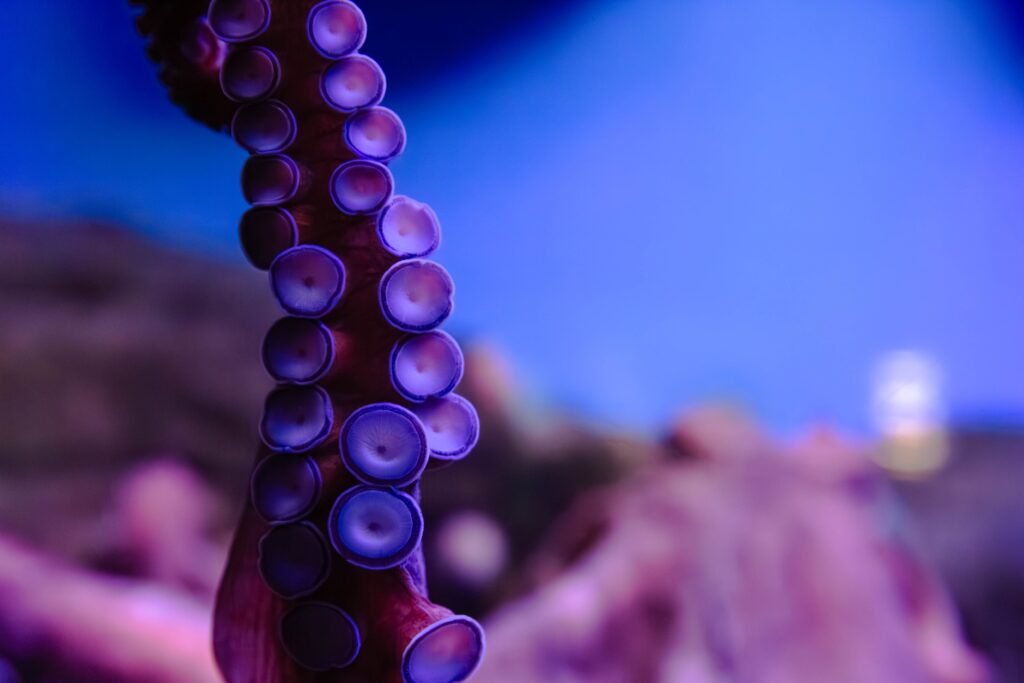
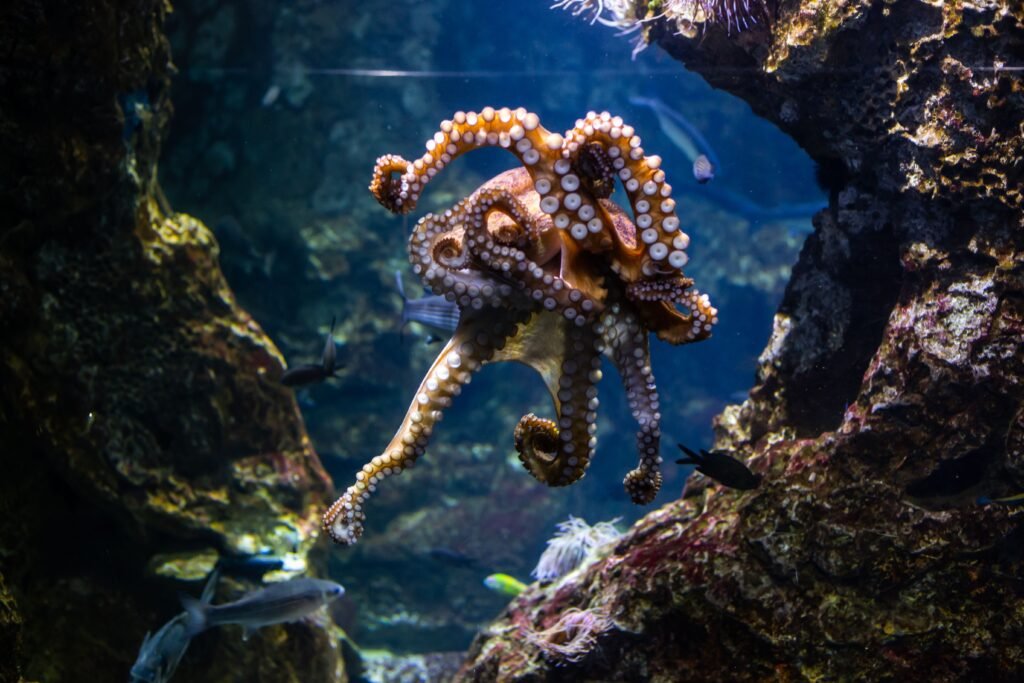
Octopus arms contain extensive nerve networks. This allows them to carry out some sensing and movement locally while still being coordinated by the central brain.You may hear this described as an octopus having “nine brains.” It is a memorable shorthand, but the more useful explanation is a central brain working with substantial nervous-system processing in the arms.
Flexible Bodies, Clever Behaviour
Octopuses can fit into surprisingly small spaces because much of their body is soft. Their hard beak limits how narrow an opening they can pass through.Researchers have also observed problem-solving abilities, including navigating mazes and manipulating containers. Such findings make octopuses interesting subjects for studying how intelligence can develop in a body very different from a human one.
Curiosity Beneath the Surface
An octopus is not unusual because it resembles us. It is interesting because its body and behaviour invite us to rethink what we expect from an animal.The next time you encounter a surprising nature fact, ask a second question: how does it work? That question turns a fun detail into a chance to understand the living world.
Which surprised you most: three hearts, blue blood, or the nervous systems in the arms?